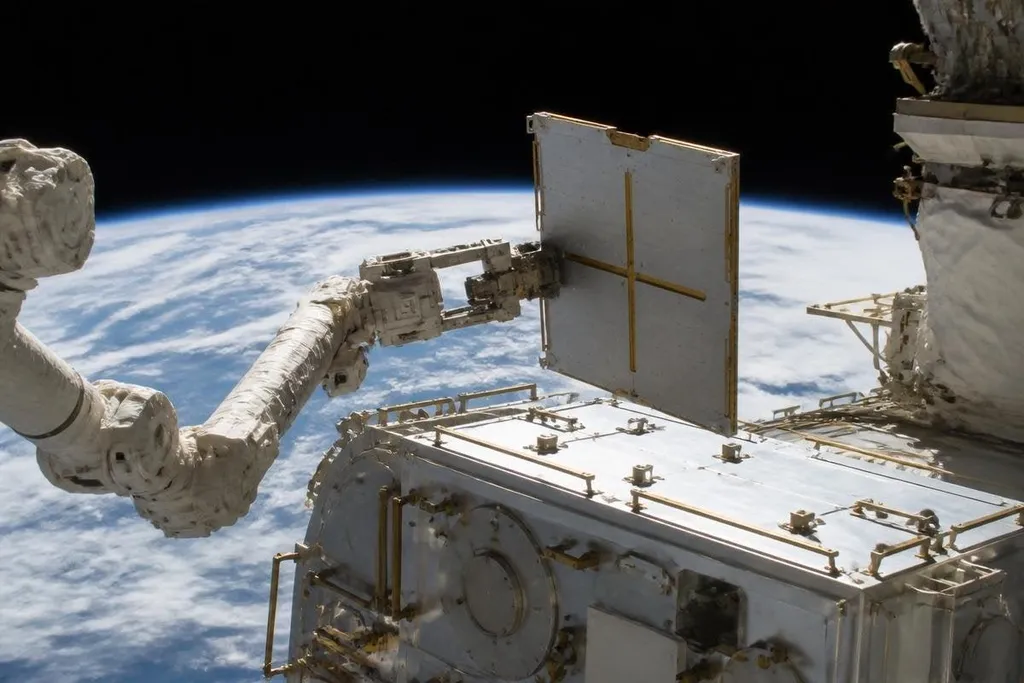
A robot could place panels, carry tools, and connect parts outside a space station. Building the whole station without people would require far more than a strong arm: it would need careful planning, fault checks, and ways to recover from mistakes.
- Robots could handle repeated work in open space.
- Loose parts, bad connections, and damaged tools would stop the job quickly.
- Human control would still matter when the plan meets an unplanned problem.
What a robot could build
Space construction starts with simple actions. A robot must move a part, hold it in place, connect it, and confirm that the connection is sound. Those steps suit machines because they can repeat the same motion without tiring.
That arm could also work in places that are risky for a person. It could move along handrails, carry a tool kit, or inspect a joint with cameras and force sensors. Force sensors measure contact, helping the robot tell the difference between a part that is seated and one that is stuck.
The work becomes harder when parts do not arrive in the exact position expected. A station component may drift, rotate, or block the path of another part. The robot then needs to change its movement while keeping the part safe.
The hard part is contact
In a workshop, a technician can feel a bolt cross-threading and stop at once. A robot needs sensors and software to spot the same problem. A small error at the start can leave later parts out of position, so each connection needs a check before the next step begins.
Fast movement would not help much here. Pushing too hard could bend a panel or damage a connector. Moving too slowly may use more power and leave less time for repairs. The useful machine would control speed, force, and position together.
Tool changes create another problem. The tool set may include a gripper, drill, cutter, camera, or inspection tool, and the robot may need to change between them. Each change adds a point where the machine can lose alignment or drop a part. Tool storage would need clear locations and a way to confirm that the right tool is fitted.
Control from Earth has limits
A person on Earth could send commands, review camera views, and approve each stage. That works well for planned steps, but the robot may need to react before a person can assess the problem.
The control system would need safe local rules for faults such as a jammed joint or a part moving out of reach.
This is where autonomy matters. The robot would not need to invent a station design, but it would need to choose safe actions inside a known work plan. It could pause, move to a safe position, and ask for a new command instead of forcing the task.
A station robot would need to find and fix faults without a technician beside it. Robot24.com robotics coverage gives that problem an Earth-based comparison through reports on machines, companies, and the service work they still need.
Power, repairs, and loose parts
The space-building robot would need a steady power supply and a way to protect its joints, cameras, and tools. Dust, glare, cold surfaces, and direct sunlight could affect sensors and moving parts, depending on the work site.
Repairs would shape the design from the start. A robot that needs a special tool for every service task would be hard to keep running. Replaceable parts, clear fault codes, and backup control paths would matter more than a top speed figure.
Loose parts are a safety issue. A dropped bolt or tool can drift away and remain a hazard. The work area would need storage points, part restraints, and checks that confirm nothing has escaped before the robot starts moving again.
A practical decision guide
A space-construction robot makes sense only when the job meets several tests:
- Repeatable work: The task follows a known sequence with few changes.
- Safe failure: A fault leaves the robot and station in a recoverable state.
- Reachable parts: The robot can access every joint without dangerous repositioning.
- Local control: The system can stop or retreat without waiting for a command.
- Service access: People or another robot can replace failed parts.
If a task fails these tests, a person may still be the better choice. Robots can reduce exposure to danger, but they also add software, power, tool, and repair needs. I'd start with inspection and part handling before asking a robot to assemble a complete station.
The first useful space builder will probably work beside people, with humans approving the plan and the robot handling repeated contact work. The open question is how much repair and decision-making a machine can manage after the first unexpected fault.